
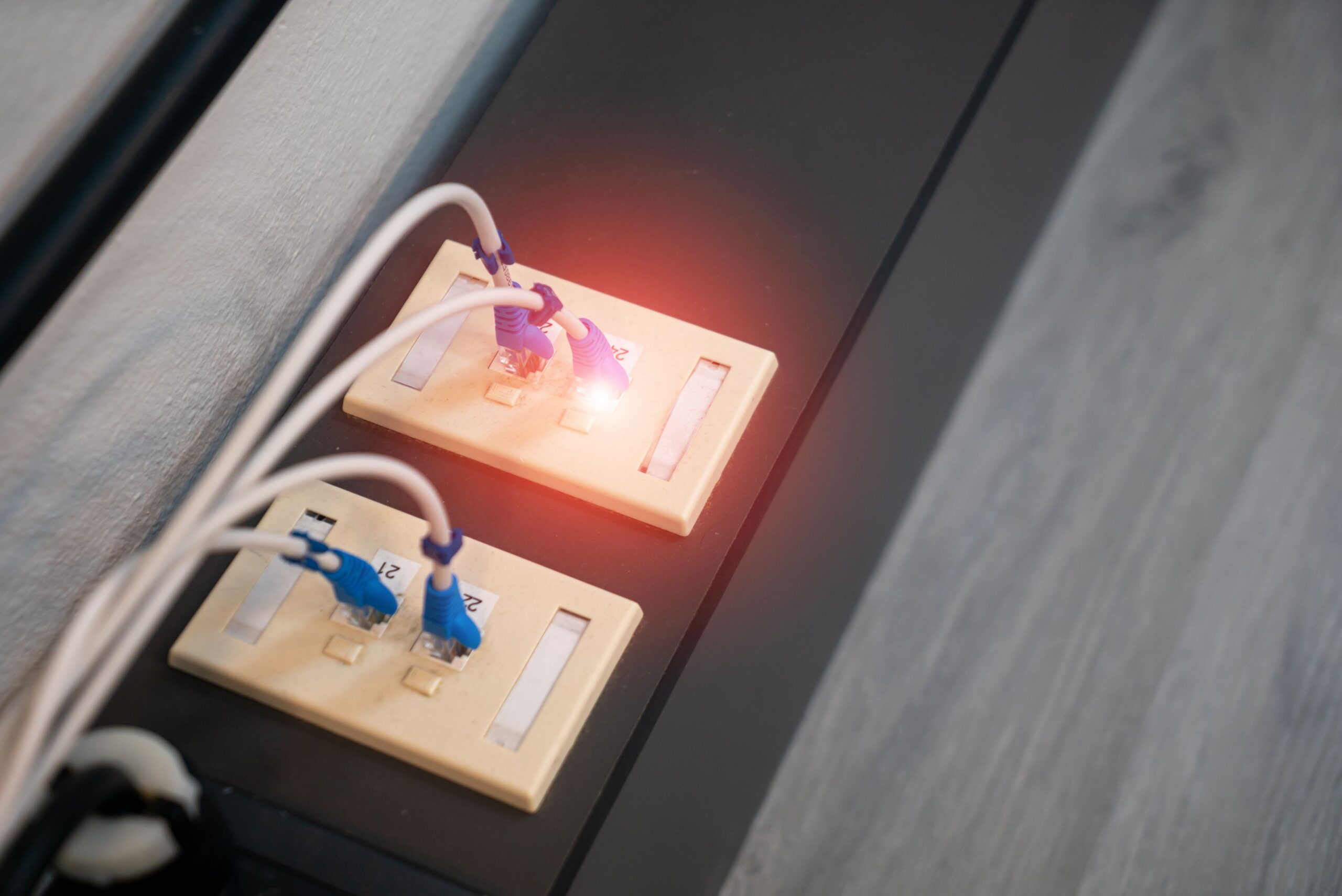
Internet service in a single-family home is usually fairly straightforward. A provider brings service to the property, equipment is installed, and the homeowner uses the connection inside the home.
Condos, apartments, and other multi-dwelling properties are more complicated.
Internet service may travel through shared utility spaces, equipment rooms, risers, conduit, hallways, and building-wide wiring before reaching an individual unit. That raises an important question:
Who actually owns the internet wiring?
The answer depends on the property, the provider agreement, the age of the building, and how the network was installed.
In many cases, ownership is split among several parties.
Understanding those responsibilities is especially important when a building is considering a fiber upgrade, changing internet providers, or evaluating maintenance responsibilities.
If your community is considering a broader internet upgrade, our HOA & MDU Internet Guide walks through the full process, from evaluating providers and infrastructure to contracts, construction, costs, and resident communication.
Note: This article is for general educational purposes only. Wiring ownership and access rights can vary by contract, governing documents, property type, and applicable law. Boards and property managers should review their agreements and consult legal counsel when necessary.
Why Internet Wiring Ownership Matters
Ownership determines more than who technically owns a cable.
It can affect:
- Who pays for repairs
- Who maintains the infrastructure
- Whether a new provider can use existing wiring
- Whether old equipment must be removed
- Who is responsible for upgrades
- How easily the property can change providers later
These questions become especially important in condo buildings, apartment communities, and other multi-dwelling units where infrastructure is shared.
A board that understands ownership before signing a new agreement is in a much better position to avoid confusion later.
Internet Infrastructure Usually Has Several Layers
One reason this topic can be confusing is that “the internet wiring” is not one single thing.
A typical condo or apartment property may include several layers of infrastructure.
1. Provider network outside the building
This includes the infrastructure that brings service to the property.
Depending on the provider and technology, this may include:
- Fiber lines
- Coaxial cable
- Network cabinets
- Utility-side equipment
This infrastructure is often owned and maintained by the internet provider.
2. Building entry point
The provider’s network enters the property at a designated location.
This may be:
- A telecommunications room
- Utility room
- Exterior demarcation point
- Network closet
Ownership and responsibility may change at or near this point, depending on the agreement.
3. Shared building wiring
From the entry point, service may travel through:
- Risers
- Conduit
- Hallway pathways
- Distribution panels
- Shared utility spaces
This is where ownership becomes more property-specific.
Some wiring may belong to the building or association, while other infrastructure may still belong to the provider.
4. Wiring to the individual unit
The final connection into a condo or apartment may be owned by:
- The provider
- The building or association
- The unit owner
Again, the contract and original installation arrangement usually determine responsibility.
5. Equipment inside the unit
Routers, gateways, modems, and other devices may be:
- Rented from the provider
- Owned by the resident
- Included as part of a community-wide agreement
Equipment ownership should be easy to verify through the service agreement.
What Is a Demarcation Point?
One term boards and property managers may encounter is the demarcation point, sometimes shortened to “demarc.”
This is the point where responsibility for telecommunications infrastructure may shift from one party to another.
For example, a provider might own and maintain the network up to the building’s telecommunications room, while the property owner is responsible for internal wiring beyond that point.
However, the demarcation point is not identical in every building.
Boards should ask the provider to identify:
- Where its ownership begins and ends
- Which wiring it maintains
- Which equipment belongs to the property
- Which infrastructure residents are responsible for
Having this documented is much better than relying on assumptions.
Who Owns Wiring in a Condo Building?
Condo ownership can be especially complicated because the property is divided between individually owned units and common elements.
A condo association may control common areas such as:
- Hallways
- Utility rooms
- Shared walls
- Telecommunications rooms
- Building risers
Internet wiring located within those common areas may fall under association control even if a provider owns some of the network equipment.
Once wiring enters an individual unit, responsibility may change again.
The condominium declaration, association documents, provider contract, and installation records can all help clarify ownership.
Who Owns Wiring in an Apartment Building?
Apartment properties are often somewhat simpler because one owner or management company typically controls the entire building.
In many apartment communities:
- The property owner controls internal building infrastructure
- The internet provider owns its network equipment
- Residents use provider or personal equipment inside their units
However, provider agreements can still create different arrangements.
For example, a provider may install and maintain wiring throughout the property as part of a long-term service agreement.
That is why property owners should confirm ownership before approving major network upgrades.
What Happens When Fiber Is Installed?
A fiber installation can introduce new infrastructure into the property.
That may include:
- New fiber cabling
- Conduit
- Distribution equipment
- Network cabinets
- Building electronics
- Unit connection equipment
Before construction begins, boards and property managers should understand who will own each component after installation.
Questions to ask include:
- Does the provider retain ownership of the fiber?
- Who owns new conduit?
- Who maintains building electronics?
- Who is responsible if equipment fails?
- What happens to the infrastructure if the contract ends?
- Can another provider use the installed pathways later?
These details should be addressed before the project begins.
Why Conduit Ownership Matters
Conduit is the pathway that carries telecommunications wiring through a property.
In many buildings, conduit can be just as important as the fiber itself.
If the property owns usable conduit, a future provider may be able to install new service with less construction.
If a provider controls the only available pathway, future upgrades may become more complicated.
For that reason, boards should understand:
- Who owns existing conduit
- Whether new conduit becomes property-owned
- Whether future providers can access it
- Whether there are restrictions on use
Infrastructure flexibility can matter significantly over the life of a building.
Can a New Internet Provider Use Existing Wiring?
Sometimes, but not always.
Whether a new provider can reuse existing infrastructure depends on:
- Who owns it
- Whether the technology is compatible
- Contract restrictions
- Physical condition
- Provider standards
A fiber provider may not be able to use old coaxial cable infrastructure for a true fiber-to-the-unit deployment.
However, existing conduit or pathways may still be useful.
Before assuming a new provider can reuse existing wiring, the property should request a site assessment.
Who Pays When Internet Wiring Needs Repairs?
Responsibility usually follows ownership or contractual maintenance obligations.
For example:
- Provider-owned infrastructure may be maintained by the provider
- Building-owned wiring may be maintained by the property
- Resident-owned equipment may be the resident’s responsibility
But contracts can change these assumptions.
A provider may agree to maintain building wiring even if the property technically owns it, or the property may assume certain repair obligations under a service agreement.
Boards should review both ownership and maintenance responsibilities separately.
Ownership and Maintenance Are Not Always the Same Thing
This distinction is important.
Owning infrastructure does not always mean maintaining it.
A contract might specify that:
- The property owns certain wiring
- The provider maintains it during the agreement
Or the opposite may occur.
When evaluating an internet provider, boards should ask two separate questions:
- Who owns this infrastructure?
- Who is responsible for maintaining it?
Do not assume the answers are the same.
What Happens When a Provider Agreement Ends?
This is another reason ownership should be addressed before signing a contract.
At the end of an agreement, several questions may arise:
- Does equipment stay in the building?
- Does the provider remove its wiring?
- Does the association gain ownership?
- Can another provider use the existing infrastructure?
- Who pays for removal or transition work?
Clear termination language can help prevent disputes and make future provider changes easier.
What Should HOA Boards Ask Before Approving a Provider?
Before signing an agreement with an internet provider or approving construction, boards should ask:
- Who owns the fiber entering the property?
- Who owns wiring inside the building?
- Who owns conduit and pathways?
- Who owns network cabinets and electronics?
- Who maintains each component?
- Who pays for repairs?
- What happens when the agreement expires?
- Can future providers use existing infrastructure?
- Are there any removal obligations?
- Where is the demarcation point?
The answers should be documented in writing.
Why This Matters for Residents Too
Residents may not think about wiring ownership until something goes wrong.
But infrastructure decisions can affect:
- Service reliability
- Provider choice
- Upgrade options
- Repair timelines
- HOA costs
For condo owners especially, understanding where association responsibility ends and unit-owner responsibility begins can help avoid confusion.
Residents considering renovations may also need approval before modifying telecommunications wiring in walls or shared areas.
The Bottom Line
There is no universal answer to who owns internet wiring in condos and apartments.
In many properties, ownership is divided among the internet provider, the building or association, and individual residents.
The key is to identify those responsibilities before problems arise.
For HOA boards, condo associations, and property managers, the most important step is to document:
- Ownership
- Maintenance responsibility
- Access rights
- End-of-contract obligations
That clarity can make future upgrades, repairs, and provider changes much easier.
Frequently Asked Questions
Who usually owns internet wiring in a condo?
It depends on the building and provider agreement. Providers often own their network equipment, while associations may control shared building wiring or pathways. Wiring inside individual units may be treated differently.
Does the HOA own fiber installed in the building?
Not necessarily. Some providers retain ownership of fiber infrastructure, while other agreements may assign ownership of certain components to the association. The contract should specify this clearly.
Who owns internet wiring in an apartment building?
The property owner often controls internal building infrastructure, while the provider owns its network equipment. However, individual agreements may create different arrangements.
Can an HOA switch providers if the current provider owns the wiring?
Possibly. A new provider may install separate infrastructure or use existing pathways where permitted. Ownership, contract terms, and technical compatibility all affect the options.
Who pays for damaged internet wiring?
Responsibility depends on ownership and maintenance terms. Boards should verify both before approving a provider agreement.
What is the demarcation point for internet service?
The demarcation point is generally where provider responsibility ends and property or customer responsibility begins. Its exact location varies by building and agreement.